
PROSPIN SYSTEMS
OIL SEPARATION & RECOVERY SOLUTIONS
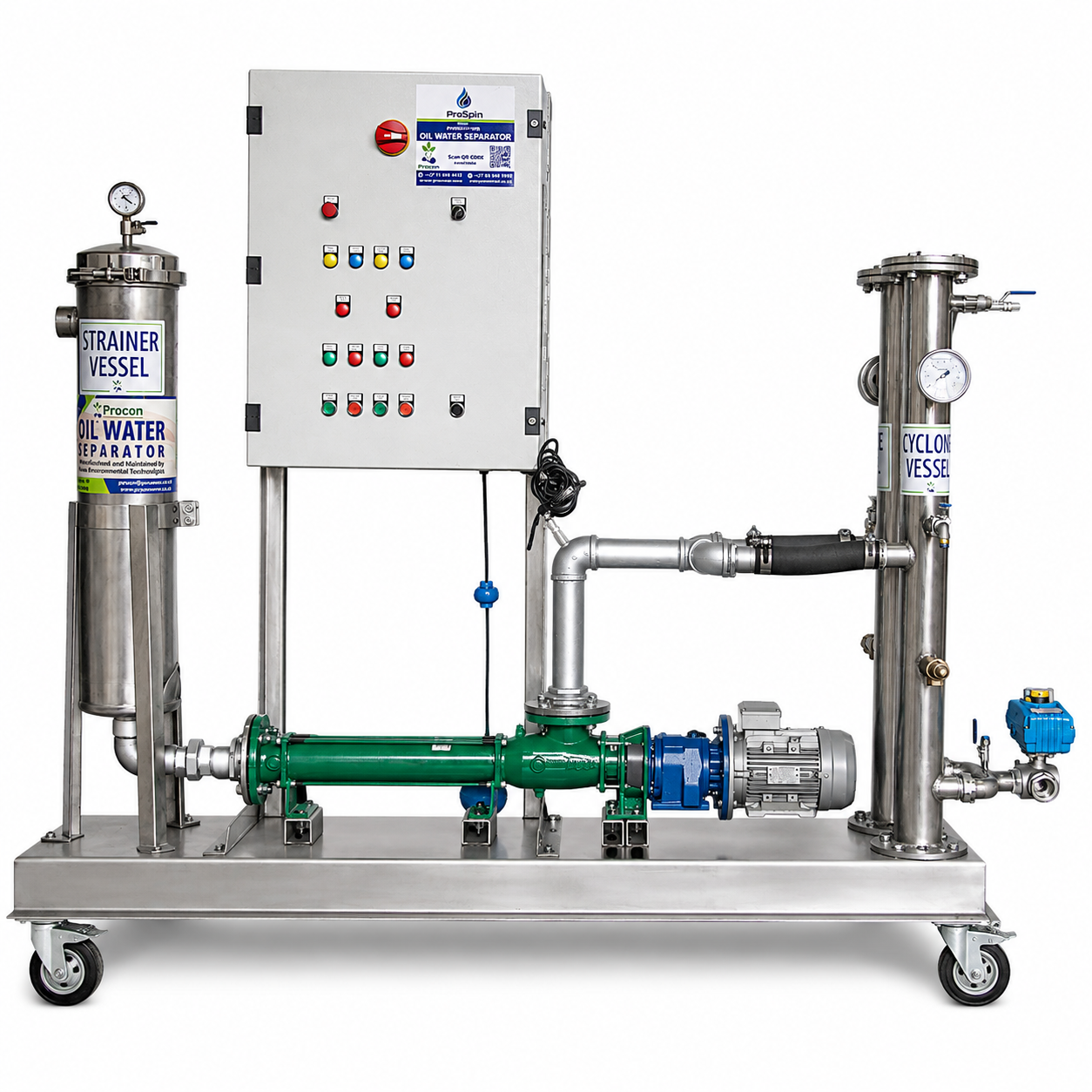
The ProSpin™ system is a configurable approach to hydrocarbon separation, available as an Oil-Water Separator (OWS) or a dedicated Free Oil Recovery (FOR) system, depending on the application and treatment requirements.
Designed with oil skimmers and separation components as part of the overall system, ProSpin™ enables the effective separation, collection and recovery of free hydrocarbons from contaminated water.
Hydrocarbon Separation
free oil recovery
Skimming & Collection
Integrated Treatment & Filtration
ADVANCED OIL-WATER SEPARATION
HOW IT WORKS
Recover hydrocarbons. Improve water quality. Protect the environment.
ProSpin is a hydrocyclone-based oil-water separation system designed to address hydrocarbon contamination in industrial and mining wastewater applications.
Procon Environmental Technologies is at the forefront of innovative oil water separation technology primarily focused on addressing water pollution caused by hydrocarbon residue generated by processing plants on the mines.
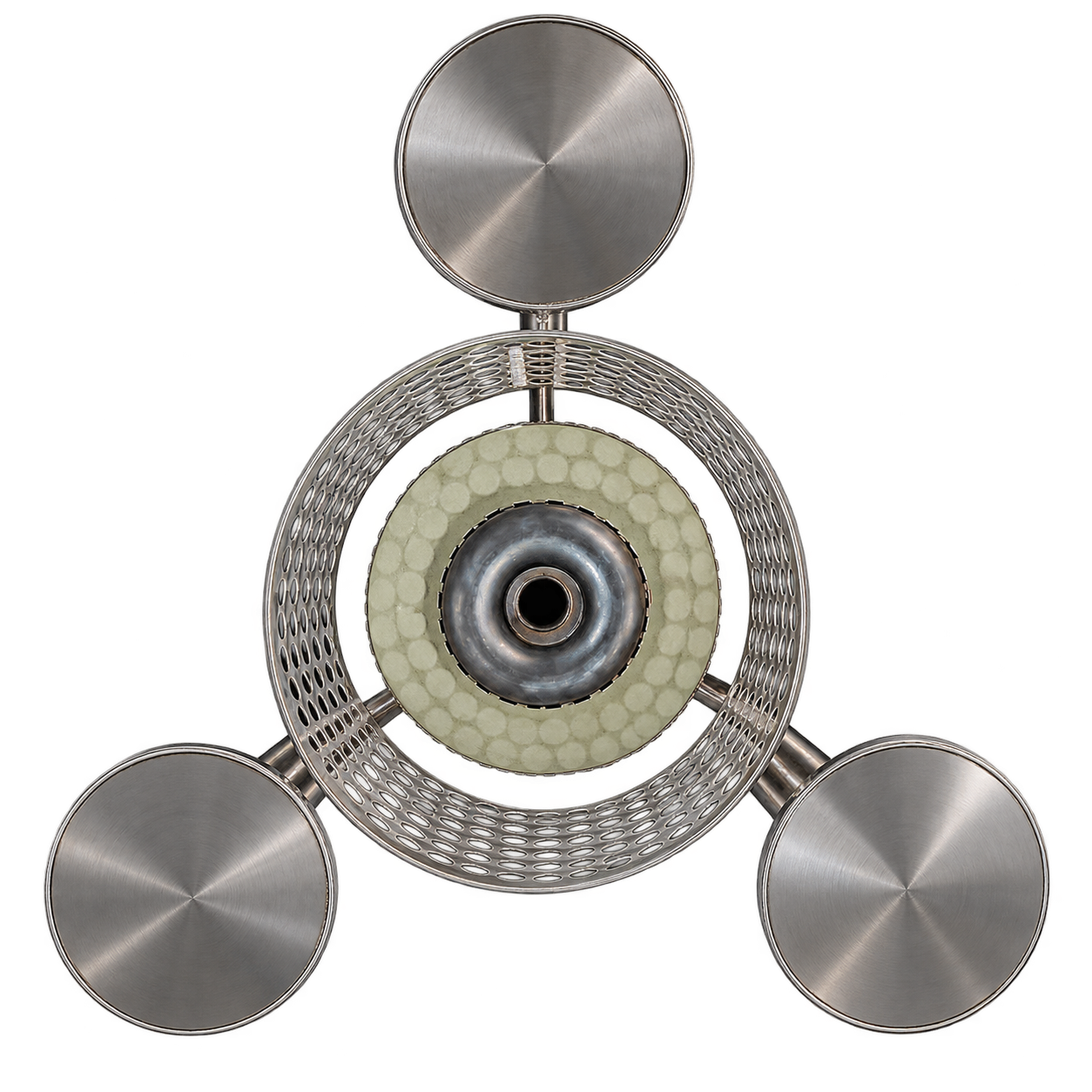
Prospin is a complex design that works on a simple principle, the oil water is pumped tangentially into the large diameter end of the separator, this initiates a spinning vortex which is accelerated as it moves down the tapered separation tube.
The motion propels the water to the outer walls due to its higher density, while the oil with lower density is moved to the centre. The separated oil is extracted via an orifice located at the outlet of the separator, then the treated water is discharged on the other end of the tube.
Recycled Waste Water
Re-use of effluent water in the wash bays and pollution control dams and other water-based applications.
Cost Effective Solution
Lower maintenance, reduced equipment failure which increases production and optimizes plant performance.
HYDROCARBON RECOVERY
Increased hydrocarbon & contaminants recovery from the effluent plant.
SMART MONITORING
MAKE YOUR OIL-WATER SEPARATOR SMARTER
For selected ProSpin Oil-Water Separator installations, Procon can offer a premium SCADA control and monitoring system. The Smart Monitoring system is designed to provide enhanced visibility and control of key system operations through a centralised digital interface. The monitoring configuration can be tailored according to the specific system design and site requirements.
SMART MONITORING IS AVAILABLE AS A PREMIUM PROSPIN FEATURE.
key benefits
- REAL-TIME SYSTEM VISIBILITY 100%
- CENTRALIzED CONTROL 100%
- PERFORMANCE MONITORING 100%
- PROACTIVE MAINTENANCE 100%
- DATA-DRIVEN DECISION MAKING 100%
Beyond SYSTEMs
A PARTNER THROUGHOUT THE LIFECYCLE OF YOUR SYSTEM
Let Procon assess your application and explore an oil-water separation solution designed around your site’s requirements. Whether you require a permanent installation, mobile treatment capability, maintenance support or a complete multi-stage oil-water treatment solution, our team can assist.
SYSTEM ASSESSMENT
Understanding the site, water characteristics and application.
SYSTEM CONFIGURATION
Developing an appropriate treatment approach around the site’s requirements.
INSTALLATION & COMMISSIONING
Supporting the deployment and operational handover of the system.
MAINTENANCE PLANS
Structured servicing to support reliable operation.
SPARE PARTS SUPPORT
Access to relevant components required to maintain the system.
Comparison Table
Free Oil Recovery
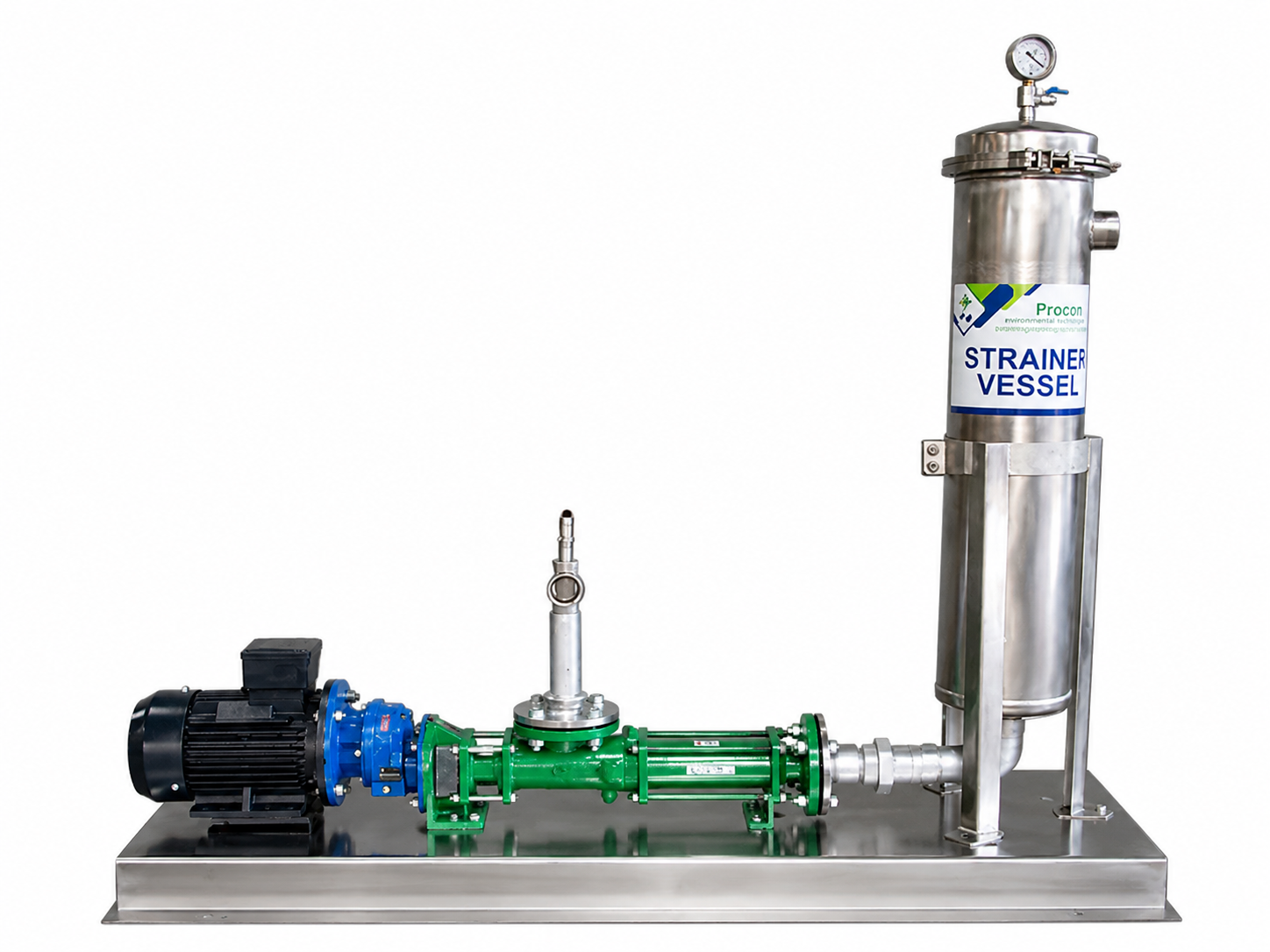
The ProSpin Free Oil Recovery system is a highly effective and innovative solution designed to efficiently remove free floating oil from the surface of the water. Unlike standard rope or mop skimmers, ProSpin can handle greater volumes of oil, making it an ideal choice for various industrial and environmental applications.
Primary Function
Recover floating (free-phase) oils from water surfaces
Oil Type
Free-floating oil only (non-emulsified)
Separation Mechanism
Self adjusting skimmers
Recovery Output
Recovered oil can often be reused or sold
Oil Water Separator
The Prospin Oil Water separator is a revolutionary system that solves the issue of residual oil waste in by using mixed flow de- oiling hydrocyclones which results in higher separation rate. Prospin has been tried and tested with results that demonstrates the efficient separation of oil and other contaminants from water.
Primary Function
Separate oil and suspended solids from water to prevent pollution.
Oil Type
Free oil & emulsified oil
Separation Mechanism
Hydrocyclone
Recovery Output
Separated oil typically sent to disposal or further treatment
FREE OILY WATER SKIMMERS
Skimmer Features
Self Adjusting
Free Floating
Stainless Steel
Trash Screen

AFTER SALE SERVICES
DOur Oil Water Separator Service Plans are structured in progressive service tiers, allowing clients to select a level of support that aligns with their operational risk profile, environmental compliance requirements, and budget.
All service levels are built on a monthly maintenance foundation, ensuring that the oil water separator system remains functional, compliant, and environmentally safe.
As the service level increases, additional value is introduced through effluent treatment management, spill preparedness, preventive maintenance, and responsive support.
Our fully managed solution, combining preventive maintenance, priority response through call-outs, and spares coverage, ideal for high-throughput or environmentally sensitive sites.
Key Failures and Their Environmental Impacts
- Leakages and Overflow: Cracked pipelines and overburdened reservoirs can release contaminated water into the soil and nearby water bodies, leading to persistent pollution.
- Tailings Dam Failures: Insufficiently designed maintained tailing storage facilities can collapse or overflow, releasing toxic sludge into rivers and wetlands.
- Cross-Contamination: Inadequate separation of process water from clean water supplies can result in widespread contamination of potable water sources.
- Stagnant Water Pools: Poor circulation fosters breeding grounds for disease vectors such as mosquitoes, escalating public health risks.

MAINTENANCE PLANS
Level 1 - Basic Compliance Service
of the oil water separator system.
• Focused on operational checks,
basic cleaning, and compliance readiness.
Level 2 - Compliance & Effluent
system.
• Routine dosing of the effluent treatment
plant to maintain optimal performance
• Provision and maintenance of a spill
response kit at the effluent plant, including
monthly inspection and replenishment.
Level 3 - Preventive Maintenance
system.
• Effluent plant dosing to support consistent
treatment efficiency.
• Minor spare parts coverage, including
skimmer internals and gauges, supplied
every six months where required.